This is a perfect launch point for your Costa Rica adventure. Rincon de la Vieja is only an hour from the Liberia airport. It is an easy first night, and you are immediately immersed in Costa Rican culture.
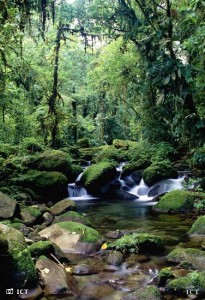
We have always enjoyed our visits here. The Rincon de la Vieja is a compound volcano, kind of a small version of Yellowstone. There are nine craters, with some oddly shaped peaks, geysers, mud pits, hot springs, and cold waterfalls. There is also lots of nature and spectacular birding.
This is off the beaten track for most North American based travelers. This is an area that is not promoted very much in the US.
It is very popular with the European marked. On the final night of our most recent visit, a large group of Germans arrived. So of course, we had to have a couple of beers with them.
Also, until recently the road has not been very good. Many years ago, my wife and I made an attempt in a Toyota Corolla. We had to give up, the road was just too bad. We eventually went back with a four wheel drive vehicle.
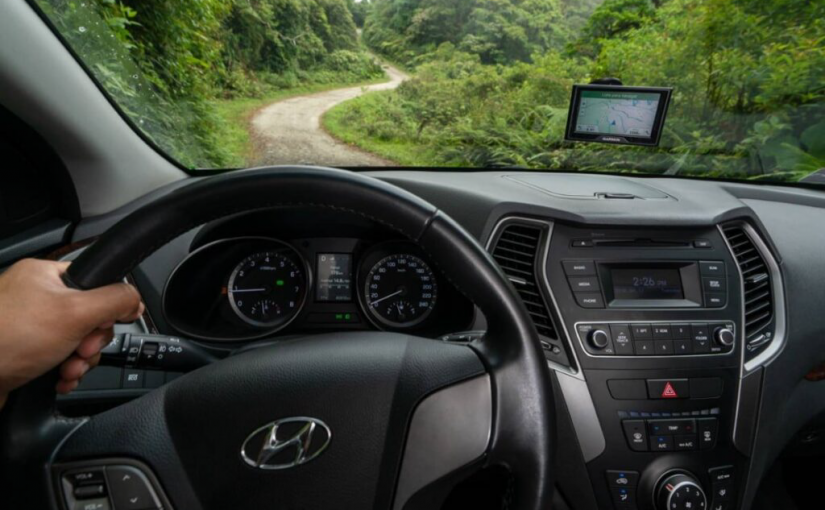
Several years ago, the national power company built a geothermal power plant in the area, They have greatly improved the road. You can make it in a sedan, but we still recommend 4WD when driving around Costa Rica.
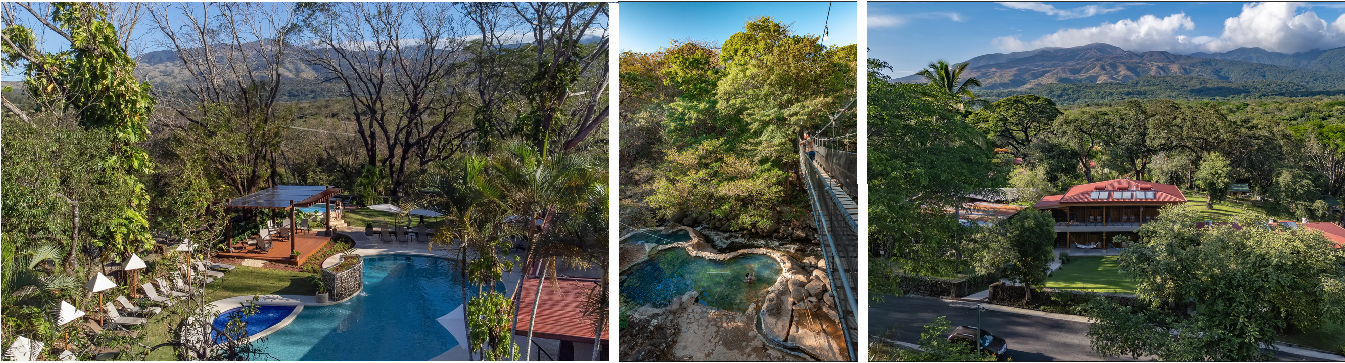
Our “Go To” Lodge here, has always been Hacienda Guachipelin. It was the first lodge in the area, and is always improving. We hadn’t been in a few years, and recently visited. We were very impressed by all of the changes.
Until now, my only genuine knock against this property, was the food. I enjoy “typical” Costa Rican food. But honestly, it is a lot of the same fare. It can get a little monotonous. Our guests tend to stay two or three nights. So the food has to be good.
But the latest improvements addressed these concerns.
Of course, there is still a typical restaurant, this is where the breakfast buffet (included in the rate) is served. They also serve lunch and dinner here. Typical food is tasty and nutritious. It is definitely worth trying.
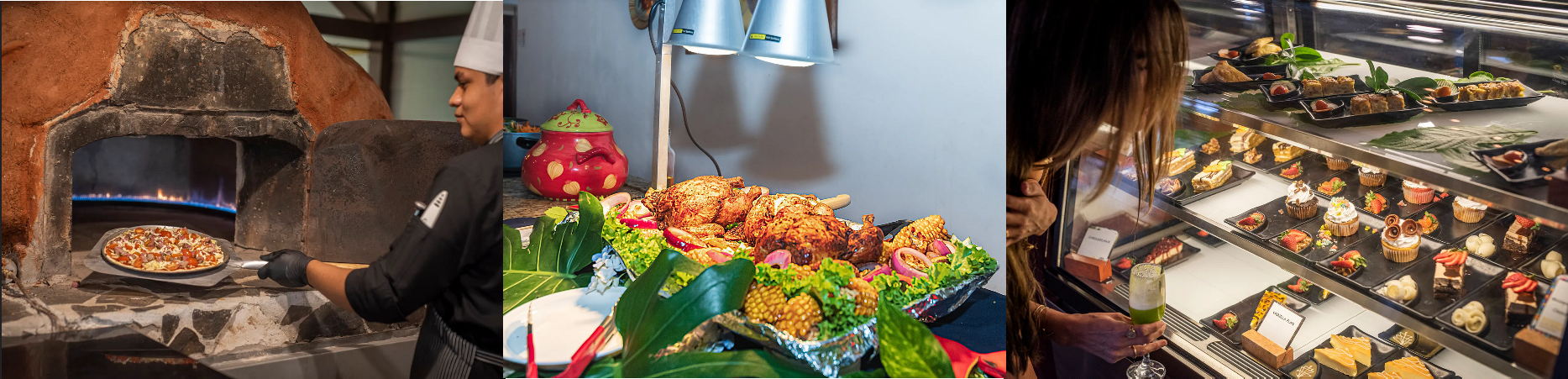
But they also now have an upscale restaurant, that offers an upgrade in the food and more options.
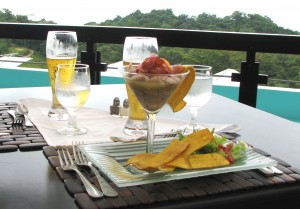
You will also find a hotel bar, that doubles as a sports bar, They have good burgers, tacos, chicken wings etc. They also offer some tico bar foods, something that the locals might order when watching a football game. Including some tasty ceviche. There is a second floor that offers pizza.
Also a cafe that serves what they refer to as “fast food”, but we felt it was better than that. Great sandwiches and wraps. All very well done. The large assortment of desserts were also quite tempting.
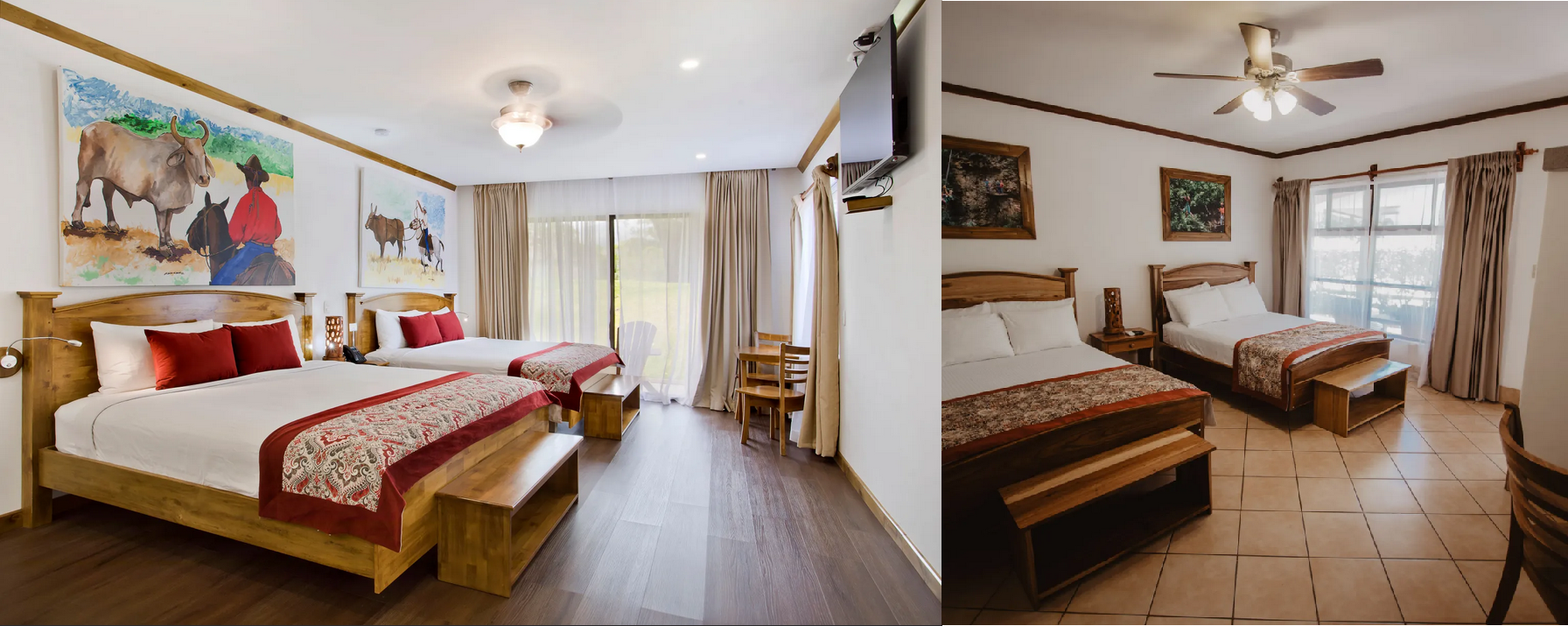
This hotel is a genuine find. The rates are very reasonable with Superior doubles starting at about 150.00 per night, plus tax (low season).
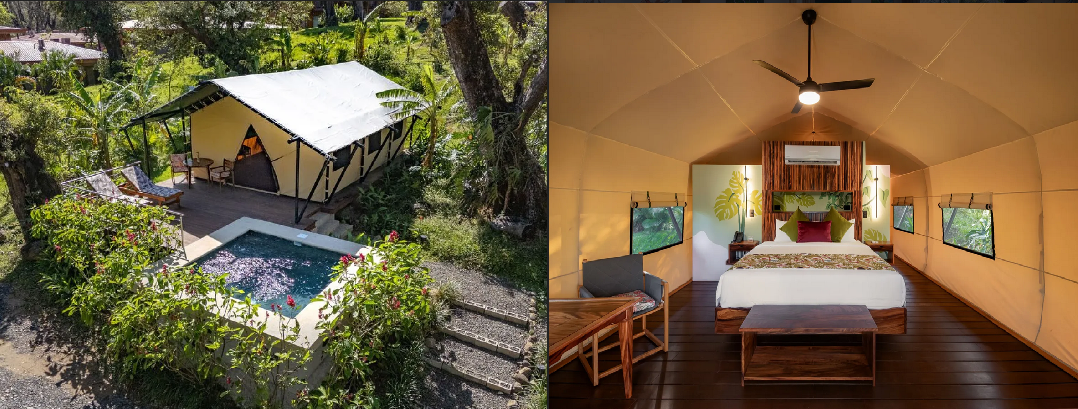
But they have accommodations at several price points, along with some gorgeous upscale Glamping Safari Tents.
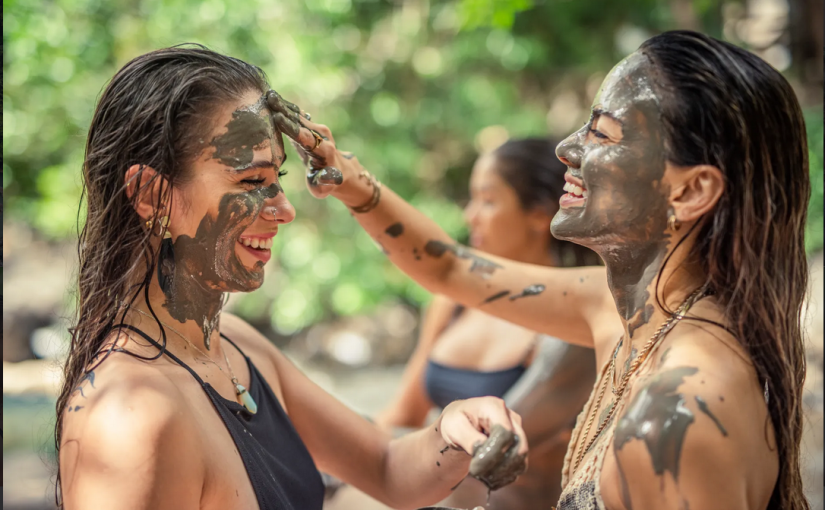
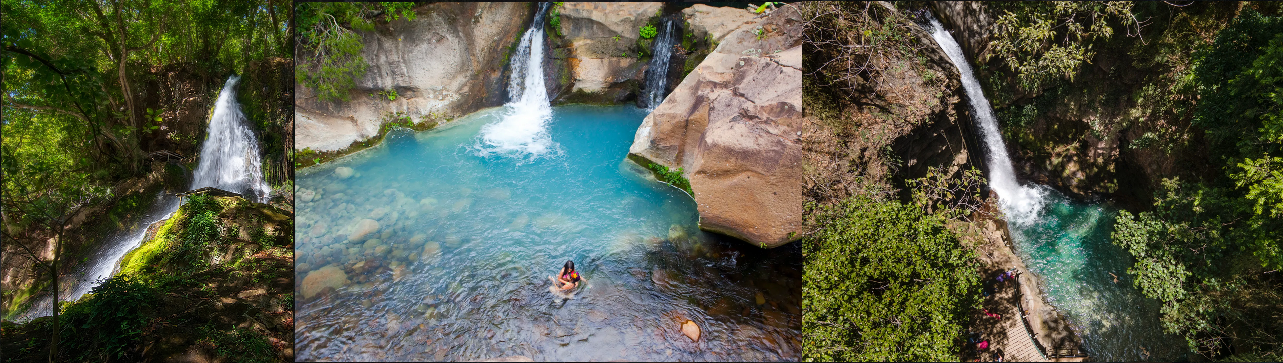
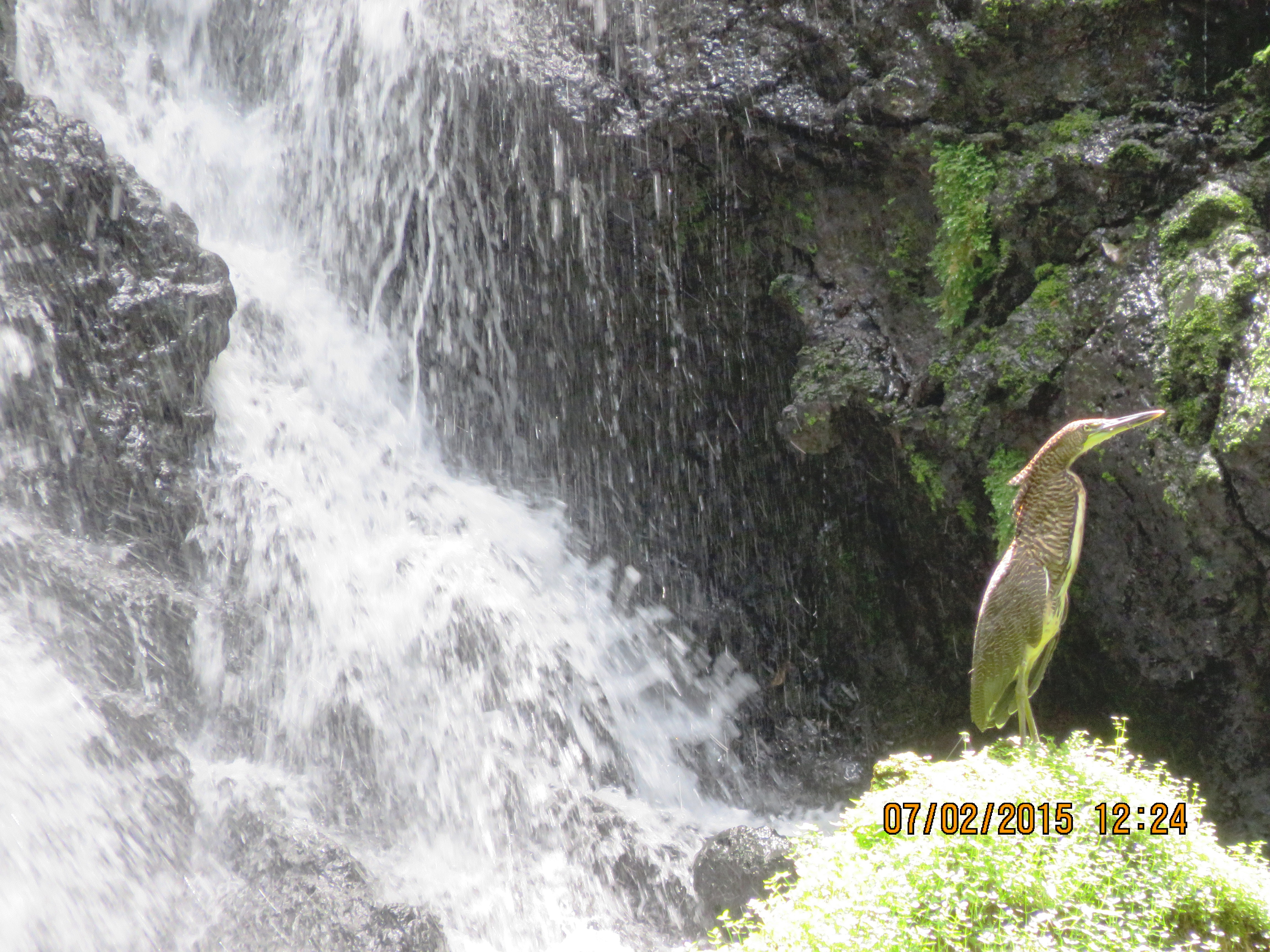
The nature is the attraction here. They offer a full compliment of attractions, that are free to the guests. There are several waterfalls onsite, along with some hot springs and volcanic mud pits. You will occasionally come across photos online, of folks who have intentionally covered themselves in mud, They most likely took these shots here.
The lodge offers a shuttle. Though we found it easier to have our own car.
There are lots of attractions located on or near the property. These are offered by a subcontractor that works closely with the lodge.
One of the more interesting to me was the whitewater tubing. You are given a helmet and life jacket, before floating on a tube. The also offer this as a combo with a horseback ride. They maintain a herd of their own horses. We took the horseback / tubing tour. We had so much fun. I never felt unsafe, and laughed our way down the river.
They also have a canopy tour. These can be combined with rappelling tour that looked pretty neat. Funny thing was that we found an old, an old episode of Samantha Brown’s show on the Travel Channel. She was doing the white water tubing and rappelling tour. She liked it! They had her hanging upside down on the rappel.
We have always found that this hotel to be a great mix of comfort and activities at a reasonable price. It is the the one I recommend the most to my clients.
I can’t wait to go back! Maybe next time, I will hang upside down in a canyon!
In all my years packaging Costa Rica, the single greatest challenge has always been rental cars. Less reputable companies run damage scams. Some overbook. Others do not have replacement vehicles if there is a problem, or offer proper support. Some just have old beat up cars.
Companies come and go. I worked with one company for years. We had a fantastic relationship with them. They were even my landlord, when we operated a satellite office in Quepos (Manuel Antonio) in the early 2000’s. They were exceptional. Until they weren’t.
The company changed hands, and they became pretty awful. They were sold to a company that owned multiple rental agencies. Suddenly, I didn’t know the people I was working with. We started getting customer complaints about missing pick ups, the condition of the vehicles, overcharging, etc.
We had been sending our “overflow” guests to another company. We made them our principal vendor, and have worked with them now for at least 15 years. They have been stellar.
This is were working with a tour operator is important. A tour operator has a relationship with the rental car company. We often offer lower rates that the car company offers on their own website. And you have this in writing, on your voucher at pick up. So no surprises. We know that they have good cars, and they don’t run scams.
Things to consider when renting a car in Costa Rica:
A good rental car is essential for a positive travel experience. Look at it this way. A family spends $2000.00 on airfare. Say you spend another $2000.00 on hotels and tours. This means you are paying several hundred dollars a day to be there. When you factor in what you pay for hotels and airfare, paying an extra $100 for a week of is not much in the whole scheme of things. A dependable and well maintained vehicle is the one thing that impacts your whole experience.
How new are these vehicles? The roads can be tough on rental cars to begin with, and customers tend to drive them harder than they would a vehicle they actually own. Rental cars have a short shelf life. This is important. The better rental car companies tend to buy brand new vehicles, and turn them over before they put too many miles on them. Turnover like this is expensive.
The cars are sold at auction, often to other rental car companies. So a car that one company deemed too old for their customers, becomes the newest car on the lot at another company. This is something to consider if two companies are offering what appears to be the same model and the same year at vastly different prices.
Are they going to honor the quoted rate and insurance? This is a big one. The forums are rift with stories of being quoted low ball prices, only to find out there are lots of fees. Or the insurance isn’t included. They have you at a disadvantage. None of the companies have cars on the airport property. If you are flying in, they take you to an offsite office. You find yourself standing their with your luggage and family, and are suddenly seeing all of these extra charges add to your rental. You don’t have many options. Most people will just cave. You just want to get going on your vacation.
Are you going to have a problem with false damage claims? Other than the company’s own testimonials, what kind of references do they have? It is difficult to challenge a foreign credit card charge. What recourse do you have if there is a problem? A few years ago, there were lots of reports of rear floor mats missing, and the guests being charged. There seemed to be rash of rear floor mats stolen. Who looks at the rear floor mats? But again, you have a flight to catch. So you pay and move on.
Will they accept any credit card coverage that your credit card offers? There is a government mandated liability insurance that you must buy. But sometimes you can waive the additional coverage if this is offered by your credit card company. Though we get a discount on the insurance too,
How many offices does the company have? If you break down in the boonies, is there support close by? What if you break down at night, will someone answer the phone?
It is something to think about when your rental car is broken down in Northern Guanacaste. A large national company will get you a replacement from Liberia in an hour or two. It might be difficult to get anyone on the phone at a small company that only has a few cars. And they may be hours away.
I have seen one of the companies that I deal with bring a replacement car on a flatbed truck up the mountain to Monteverde, AFTER DARK. That’s worth $100.00. Anyone who has driven that road in the daylight will agree!
This is where postings in the travel forums or an experienced Costa Rica tour operator is important. You cannot make this decision based on price alone. A US badged company is also not a guarantee. Many of these are smaller companies paying a franchise fee. Educate yourself as much as possible. This is one case of getting exactly what you pay for.
Not to blow my horn. But working with a tour operator is one way to avoid this.
Ceviche (also spelled Cerviche) is almost as important to Costa Rica Cuisine as the ubiquitous Gallo Pinto. It can be found all over the country. From bus station counters to high end restaurants, you will almost always find this fish cocktail on the menu.
I live in New Orleans, and I am a gumbo junkie. Working from essentially the same ingredients and spices, everyone here produces a different gumbo. All local cooks have their own recipe, and all are (usually) delicious. I almost always order a cup or bowl of gumbo when I see it on a menu. I want to taste everyone’s individual creation.
Ceviche is the same way. It is served throughout Latin America. Every country, and every cook, has their own spin. But the basic ingredients in Costa Rica are fresh fish, lime juice, minced onions, cilantro and minced peppers. Some cooks add fresh pepper and salt as well. There are some variations and secret ingredients, and it is always delicious. The fish varies. Most of the time it is either Tilapia or Corvina (Sea Bass). I have also enjoyed excellent shrimp Ceviche. I have even had “meatless” Ceviche, that is made with chayote (a Latin squashlike veggie) or mangos.
Those unacquainted with ceviche will turn their nose up at it. They think of it a raw fish. It doesn’t sound very good. But sometimes, you need to keep an open mind and dive in.
Ceviche is never actually cooked over heat. The trick here is that the dish is marinated in the lime juice, and the citric acid “cooks” the fish. It also adds a very nice astringent feeling on the palate. This is the perfect refreshing and cool snack to enjoy at a beach side soda (small outdoor restaurant) with a cold brew.
Traditionally, this dish is accompanied by Patacones. These are mashed and fried green plantains. They don’t sound appetizing. But you have to trust me on this. Fresh warm patacones served with the cool ceviche is the perfect counter point to the citrus. You scoop up the ceviche, live you would a dip. Some places serve it with soda crackers, and some with tortilla chips.
Tortilla chips seemed to be replacing the patacones. Especially in a bar that lacks a full kitchen. The crunch is nice, and they are still good for collecting up all of that delicious protein.
If I don’t get patacones, I prefer the soda crackers. This sometimes gets me teased by my city friends. They call me a peasant. They see eating ceviche with crackers as lower class. Which is a little strange. Costa Ricans are fiercely proud of their Campesino heritage.
But I was first introduced to ceviche by a family of locals on the beach, during my first visit to Costa Rica in 1990. They ate their ceviche with soda crackers, So for me, that was just how it was done. It is still widespread. You can usually ask for some crackers in any soda in the country. No one bats an eye. I like the crispy, salty base with my chilled fish cocktail.
I also usually prefer tilapia over corvina, because I sometimes detect a slight fishy flavor in the corvina. But both are fine. The spices are usually pretty mild. So most of the time, I mix in a dash or two of hot sauce.
I have “researched” this extensively. In no particular order, here is a list of my favorite ceviche in Costa Rica. So Far!
The bus station in Quepos. I know that sounds strange. The bus station snack bars don’t look like much. But the food at these stops is usually the cheapest in town. The ceviche here is particularly good, because this is a fishing town. The owners have access to the freshest ingredients.
Hotel Gaia, also in the Manuel Antonio area. A more upscale version, with some different ingredients. But this restaurant serves some amazing food, and the ceviche is no different. We like their Euro feeling and elegant open air restaurant, that feels more like seaside Italy than Costa Rica.
Palenque Garabito. Located on the Pan American highway, between Puntarenas and the turnoff to Monteverde. This is a roadside soda, that is a slight cut above your typical soda. Of course it is open air, casual, and inexpensive. But the waiters wear ties, and seat you. The ceviche here, is an always fresh corvina version. This is a required stop for us whenever we pass by. During football (soccer) season, all the waiters line up in the dining area to watch the game and kibbutz with the Tico clients. True local color.
Restaurante Caballo Blanco. Also located on the Pan American highway, about two miles north of Palenque Garabito. This one is newer (but well established). It is slightly more upscale, though on past visits it has been a little less expensive that Palenque. Truthfully, either is fine.
Unfortunately, I have had to edit this list. For various reasons, a few of my favorites went out of business. The pandemic was brutal for the mom and pop sodas.
If you happen to come across really good ceviche during your travels, let me know. I am always up for more research. Buen Provecho!
I spend a lot of time reading and sometimes responding to forum posts in the different travel web sites. I know that a lot of the folks there enjoy the beaches and the volcanoes of Costa Rica.
But I also notice that many people have said that there is not a lot to do in Monteverde. My guess is that this is because the activities here are not as “in your face” as they are in other parts of the country, or on an organized tour.
I always bristle a little when I read this. As a (very) part time Monteverde resident, I have to disagree. Sometimes you just have to look a little harder.
So here is my list of two dozen things to do in Monteverde:
Canopy (zipline) tours. Invented here, and still the best in CR. Maybe the world. Don’t miss the Tarzan swing.
Hanging bridges. Ditto.
The Monteverde Cloud Forest Reserve. World famous, for good reason.
Check out any of the other reserves. The different altitudes create different ecosystems. You will be amazed at the bio diversity up here.
Check out the numerous art galleries
Hike to the San Luis Waterfall
Take a horseback tour through the countryside around Canitas.
Tour the Rainaro (Frog zoo)
Tour the Serpentarium (Reptile zoo)
Tour the Insectarium (Insect zoo)
Take the “Trepiche” tour. A local family farm. They take you from the harvest to the farm’s own production of coffee and sugar. Sweet family, and much more interesting than I expected!
Check out the Bat Exhibit (with flight cage), more than you ever wanted to know about bats. But fascinating.
After you visit the bats, go upstairs to the little restaurant that makes their own chocolate. Great food here too, Argentine owned.
Tour the cheese factory, then enjoy the best milkshake you have ever had.
Visit the Orchid Garden just outside Santa Elena. The self taught horticulturist here has created an amazing garden, and even discovered a previously unknown species. We were amazed by the tiny orchids that you need a jeweler’s loupe to see. A perfectly formed orchid in miniature.
Take a guided night tour into the forest
Have a coffee and great fresh pastry at Stella’s bakery
After your visit to Stella’s, walk across the street to shop for handicrafts made by local women at the CASEM woman’s arts cooperative. You can also buy local coffee from the roaster next door.
Hear live music at Moon Shiva. Jazz, folk, Latin, etc. Always entertaining.
Check out the Saturday farmer’s market. Definitely some local color. Sometimes there is music, and there is always local food to eat on site. Good Ceviche!
Go to the hummingbird gallery. Great photo ops of dozens of hummingbirds.
Eat at any of the “International” restaurants. We are getting some interesting food up here!
The Osa Peninsula has always been a rustic place. But that is a good thing. National Geographic magazine spent some time here a dozen or so years ago, and called Corcovado National Park the “most biologically diverse place on earth”. High praise indeed. But I think it could be true. We have always enjoyed our visits here.
Though I have had to warn my less experienced travelers that this is a remote place. Sometimes, the accommodations can be rustic and food choices limited. You can go a whole day without power. But the payoff is the dazzling variety of nature and world class hiking in the primary rainforest. My advice has always been to “suck it up”, deal with some of the issues and just get out there. It is worth it in the end.
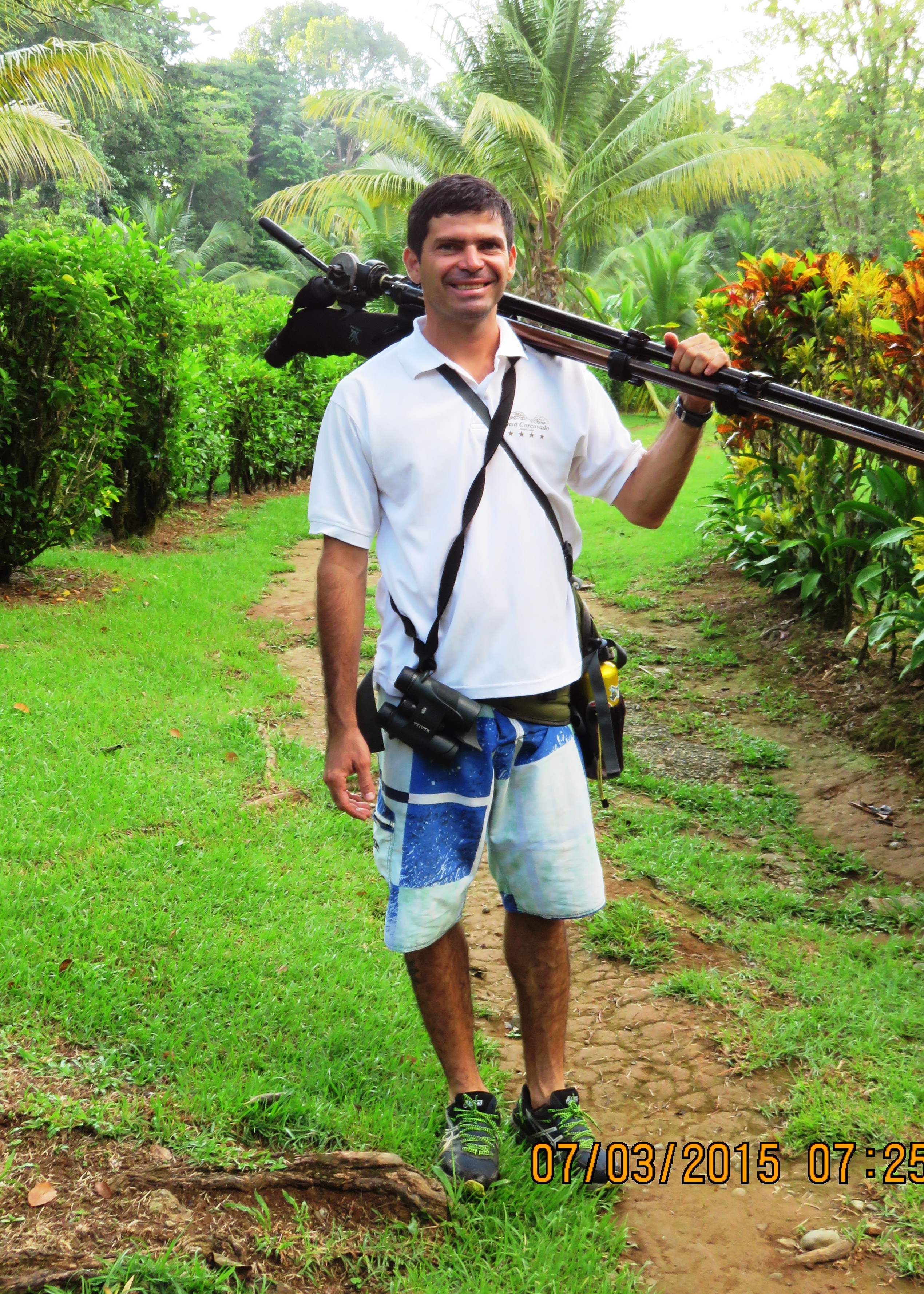
A huge exception to this rule has always been Casa Corcovado. I tell my guests that the folks here make going to an unforgiving environment as comfortable as possible. I also tell them that this lodge is very well run, and fires on all eight cylinders. My guest reviews have consistently been very positive.
We like to inspect every property we offer at least once every couple of years. More often than that if we happen to be in the region. We have been in business since 1992, and we have a pretty good network of suppliers. So most hotels are gracious enough to offer us a short stay to get to know their property, so that I can properly represent it to our clients.
If I stay in a hotel for a few days, I will always take a day to check out what might be new and interesting in the area. I also look in on my existing suppliers to make sure that they are still offering a consistent product.
But this is a tough one. Getting to this part of the Osa requires round trip airplane and boat rides. When you stay at any of the lodges down here, food has to be included. Most of the time, there are tours included too. There really aren’t any other options, so it all becomes part of the package. A free room for a night is one thing. But these extra expenses make it hard for me to ask for a freebie just so we can come down and look around. Consequently, I had not been onsite at Casa Corcovado in a decade.
I have worked with the management team here for years. The owner Steve and his manager in San Jose, Geovanny have always been terrific. Most of our contact is with the folks in the reservations department. We always find everyone on their team to be extremely professional. But more than anything, they are also just really nice folks, and a pleasure to work with. When Geovanny heard I might want to come down with my wife, he immediately invited us. Of course, we gratefully accepted.
When the day came, we flew down from San Jose on Sansa. We had fun flying along the coast and snapping pictures of Manuel Antonio from the air. We were greeted at the Palmar Sur airport by Jacob, who was to be our guide for the next three days. He packed us into the van, and we drove through the plantations to the lodge’s “Hacienda” welcome center on the Rio Sierpe. This was our chance to relax for a few minutes with a cool beverage, use the restroom, etc. We sat at a table on the river and watched the local boat traffic. Everything from modern boats used by the lodges, to some old fishing boats that didn’t look very seaworthy at all! We waited here while some other staff members arrived to begin their stay at the lodge. They all have their own schedules. They commute in and out, and stay for days or weeks at a time. We had a pretty full boat by the time we pulled away from the dock.
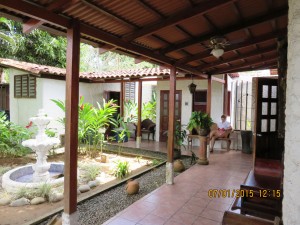
We rode down the river towards Drake Bay. The driver diverted from the main river and into the mangroves that grow thick along the river near the ocean. We slowly navigated the narrow canals, while Jacob explained the importance of the mangroves in the local ecosystem. Very cool. I’ve been in a mangrove forest before. But these were extensive.
We eventually cleared the river mouth and crossed Drake Bay to make a landing at the beach in front of Casa Corcovado. It was high tide, and we had to roll up our shorts and hop out into knee deep water. But nothing too difficult, and the guides stayed close to prevent any mishap. We hadn’t even reached the lodge yet, and we were already enjoying our adventure. We left our luggage to the staff, and boarded the tram (actually a trailer pulled by a tractor) that took us up to the lodge for lunch.
Wow. Things had changed. One of the things that I have always appreciated about Steve, is that he is not a guy who is content to lay on a beach. He always has a new project, or an idea to improve the guest experience. He closes the lodge for two and a half months during the rainiest months of the year. The staff members that want to take vacations, do so at this time. But the lodge employs a lot of local folks who depend on the lodge to support their families. They can’t afford a ten week vacation. So they are welcome to stay on to help with Steve’s many projects and general maintenance
Since I had stayed here ten years ago, there have been massive improvements to this already stellar lodge. There was a new pool to compliment the existing spring fed pool. The open air bar had been expanded and is now used for lunch and dinner when there is low occupancy. The old kitchen building is gone, and replaced by a beautiful new restaurant with high ceilings and stained glass windows. The staff area has been improved for their comfort, and all of the guest bungalows have been enlarged and reconfigured. They have also built some new Jr. Suites for family groups. They have improved their trail access, and rebuilt their little sunset rancho where drinks are served every evening. Oh yes, they are off the grid and generate their own reliable electricity. We were blown away. This wasn’t even the same facility from ten years ago.
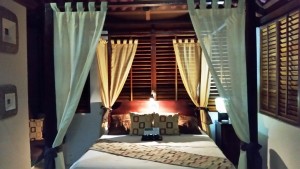
After a delicious lunch and brief orientation, we were shown to our Honeymoon bungalow. It was stunning. There was a huge four poster bed with high quality linens. There was a large vanity area with closet and shelf space. The commode was in it’s own water closet, and there was a huge outdoor shower (with hot water, of course). This was lots of fun. It was lit with blue LEDs, and was a great place to shower and look at the stars. There was also the usual compliment of quality grooming products and a stocked honor bar. Not bad for the middle of the rainforest! I do have to mention that their fragile power system can’t support air conditioning. But the evenings cool down quite a bit, and we survived very well with the strong ceiling fan over the bed.
Our luggage had been brought up from the boat, and placed in the bungalow. We had some free time to move in, then put on our bathing suits to check out the new pool. We enjoyed a beverage and lounged about for an hour or so, before going back to our room to change.
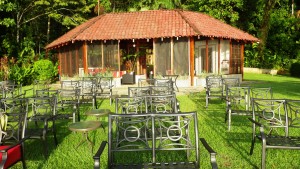
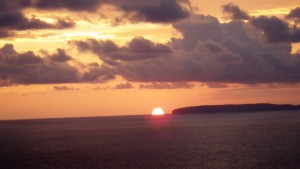
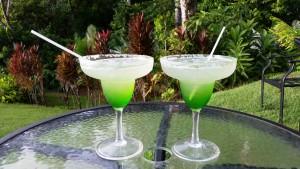
By then, it was time to stroll down to the sunset rancho for a margarita before dinner. This became a ritual every evening. This is an active place. Plan on expending a lot of energy having fun here. A beautiful sunset and adult beverage is always a great way to finish a busy day. They serve some good boca’s (appetizers) at the rancho too.
We happened to hit the lodge during a lull and there were only two other people at dinner. They were leaving the next morning. So we had the place pretty much to ourselves. Jacob stopped by to give us the plan for the next day. We were going on a day long hike in Corcovado National Park. The lodge was bringing us lunch at the ranger station. It was going to be just the two of us and Jacob. A private tour.
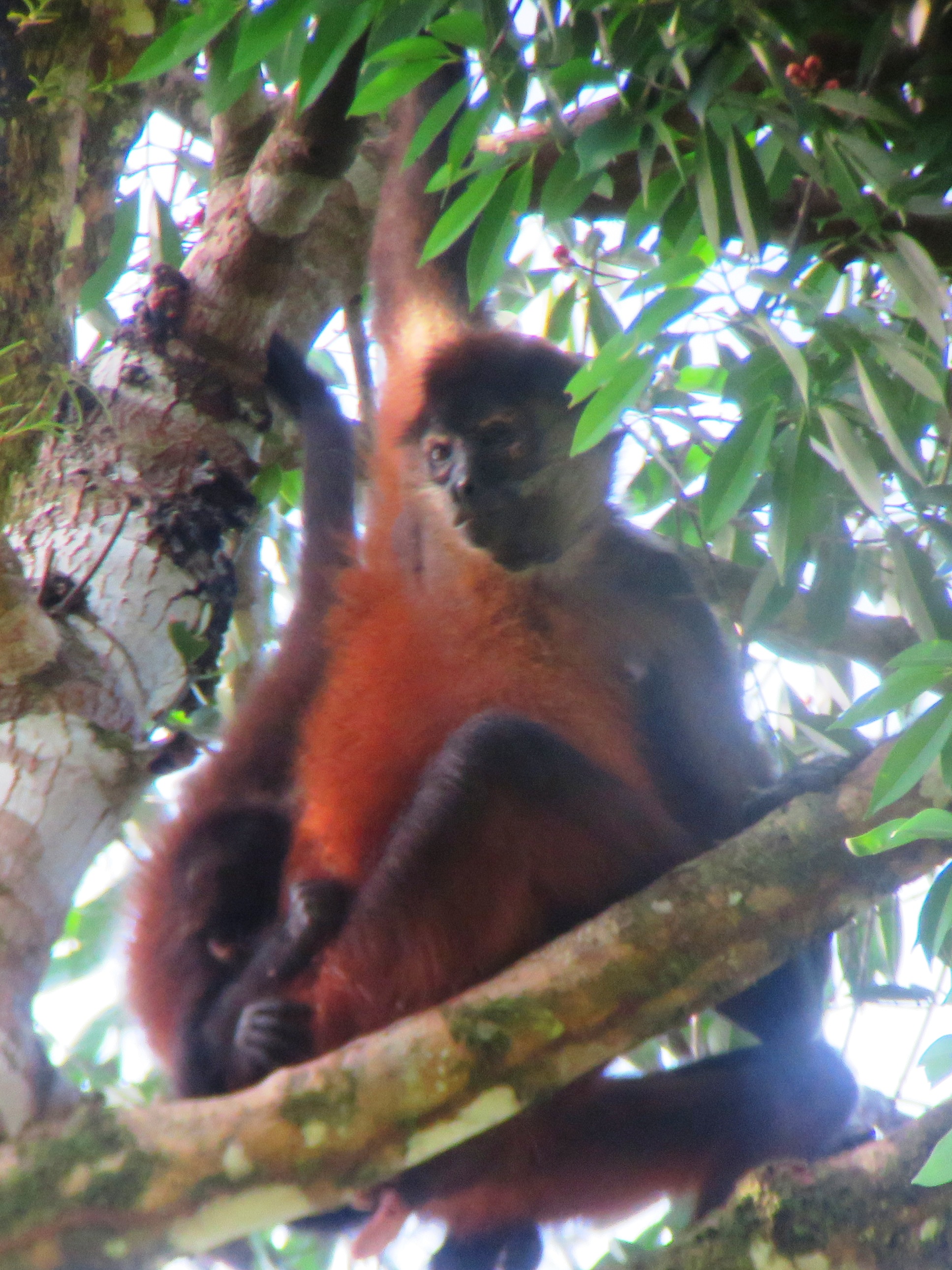
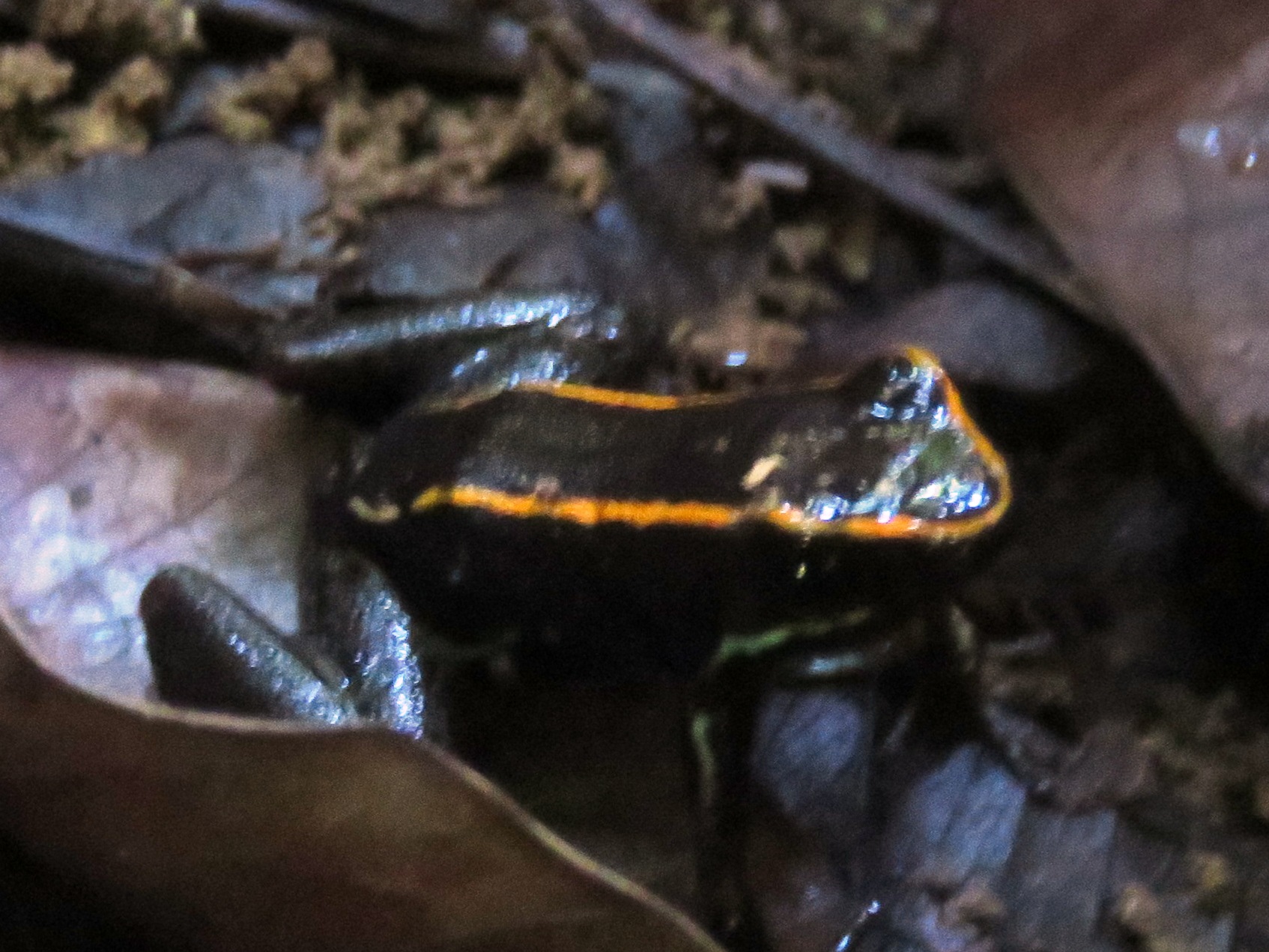
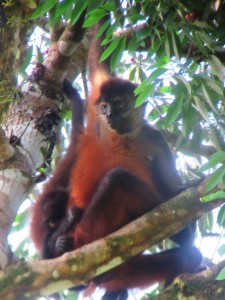
We were up early the next morning for a delicious breakfast. The meals here are not buffets, we could order whatever we wished from the menu. Jacob was waiting when we finished. We went over to the “guide shack” to be outfitted with rubber boots and walking sticks. Off we went into the woods. It was muddy, and there was a fresh fallen tree blocking one of the paths. But it was easy enough to get around. This day was so much fun. Jacob was an excellent guide and interesting guy. Smart and well traveled. He knew his stuff, and seemed happy to realize that we wanted to know everything we could. He worked really hard at finding all sorts of flora and fauna. We soaked it up. Birds, monkeys, poison dart frogs, odd trees, fruits, insects, and flowers. It was a great morning. We stopped for an hour at the ranger station for lunch. Jacob cut fruit and laid out our full lunch of fruit drinks, lunch meats, fresh bread (baked at the lodge), gallo pinto, cheeses, etc. He then disappeared for a short while to visit with his ranger friends. We relaxed some, and checked out the beach.
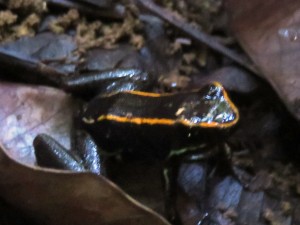
After a bit, he came back and we started our walk back along a river to the
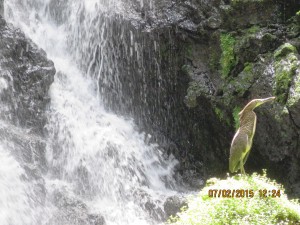
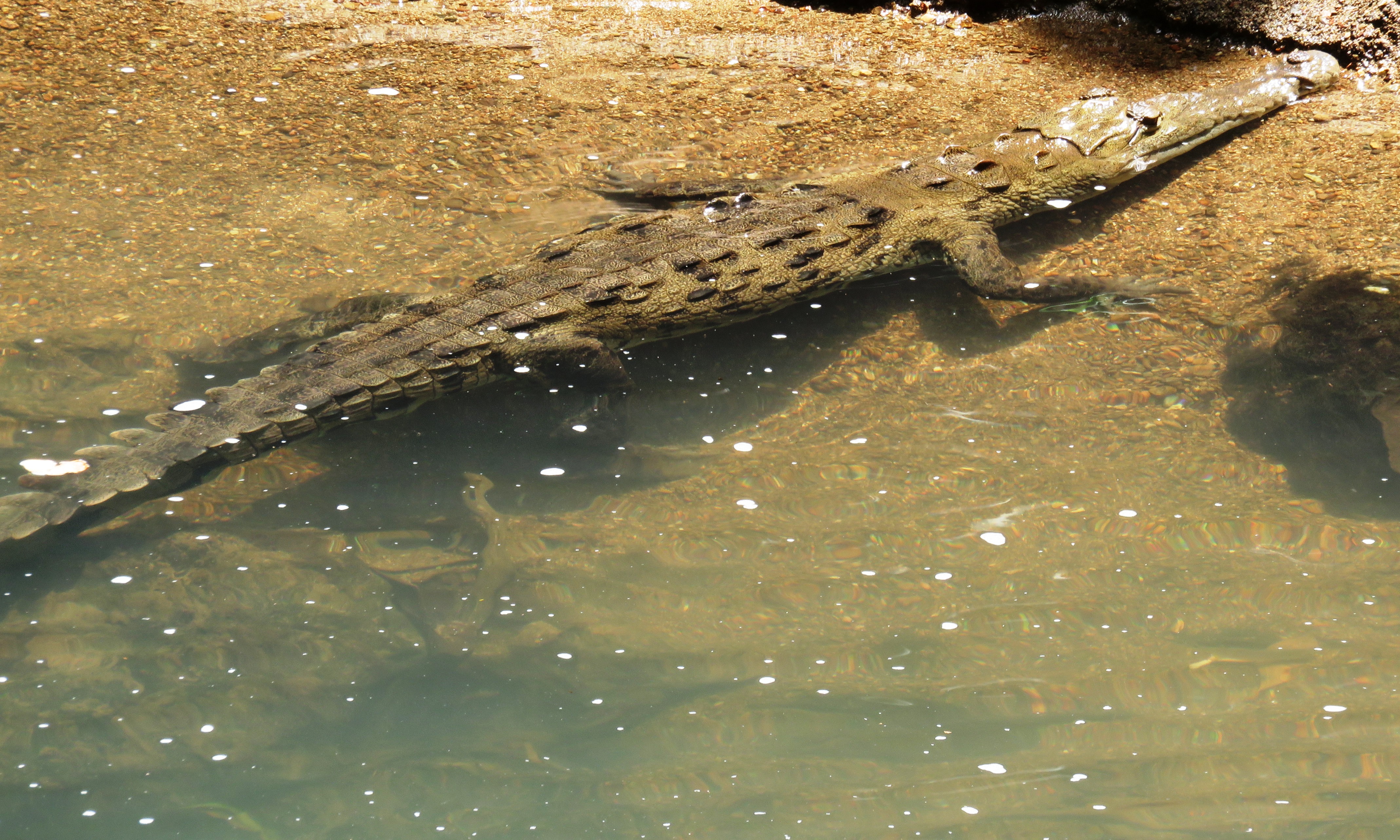
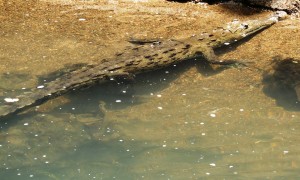
waterfall. I had been here a decade ago, and it was as beautiful as I remembered. There were several pools downstream. One of them was good for swimming. Another held a seven foot long crocodile. He was in a pool upstream from us, and Jacob assured us that it was okay. The guides apparently knew this fellow. So we took a nervous quick dip (it was hot and humid, we really wanted to cool off). Jacob didn’t join us. But I did notice that he had positioned himself where he could keep an eye on both us and our croc friend. So I felt a little better.
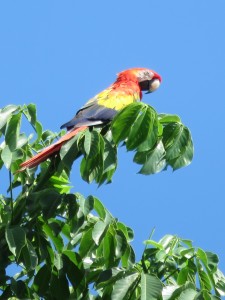
We eventually headed back to the lodge the same way we had come. When we arrived back at the ranger station, we found several huge scarlet macaws foraging in a tree. We were able to get very close, and take lots of pictures. When we arrived back at the lodge we were two very happy campers.
One quick note, this hike ain’t for wimps. Don’t get the wrong idea, it isn’t an iron man competition. But I don’t want to give the impression that this is just a stroll in the park either. I’m a middle aged (if I live to be 120) guy, who does light to moderate exercise every week. I had no problem handling it, so I think most people can do it. But this is an active destination, and it is hot and humid. We had sweat right through our clothes by lunch. You will find yourself stepping over felled trees and branches, wading in mud, and navigating the occasional narrow path. By the end of the day, we were a little worn out. But it was worth every single second.
After our hike, Melissa grabbed a shower, and went to get the massage she had booked the day before. I toured the property with the resident manager, Steven.
He showed me all the improvements, and the various accommodations. I particularly liked the Jr. Suites, which were new since my last visit. These are two adjoining one bedroom apartments each with 1½ baths. They can be combined. With the sleeper sofas open, you end up with an accommodation with two private bedrooms, two sleeping areas in the living rooms, two full baths, and two half baths. Perfect for a family group. After my tour, I went back to the pool for a dip and to wait for my wife.
Melissa came back energized and gushing about her massage. She said it was the best she ever had. I immediately booked mine for the next evening. This evening’s routine was much the same. We had drinks at the Sunset Rancho and another wonderful meal. Jacob stopped by our table to tell us we were going snorkeling at Isla del Cano the next day. A very nice couple had come in that day, and we had spied them in the pool earlier. We met them at dinner and found out that they were Costa Ricans, who were also involved in tourism. They were coming with us on our tour the next day. Jacob had also offered to take Melissa and I out on a morning bird tour before breakfast.
That night, Melissa was awakened by a horrible racket. There was some kind of animal carnage going on in the nearby woods. From her description, the guides thought that a puma or some other wildcat had gotten hold of a monkey. It goes to show how close to nature the lodge is. It also made me think about those wildlife films we have all seen. The prey always gives in so easy. That apparently wasn’t the case here. But then again, I slept through it. I’ve also once slept through an earthquake in Costa Rica. Go figure.
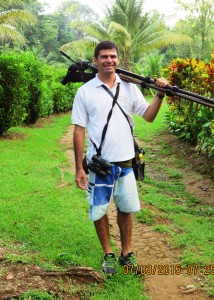
We were up early in the morning to walk the lodge property with Jacob. What a fun way to work up an appetite for breakfast. We had seen the day before that this guy had a good eye, as he was spotting animals every where. He proved it again this morning. He would hear a bird call from a couple hundred meters away, and in a half a minute he would have it sighted in on his amazing scope. We had a least a dozen good sightings, then it was time for breakfast and to board the boat to the island. Along with our boat captain and Jacob, we had the other two guests and another guide with us. We had a nice morning snorkeling with lots of colorful schools of fish. There was a beautiful little beach, and we had fun shooting a video of the hermit crabs for our grandson.
But the big adventure of the day was yet to come, as we were riding back in the boat. I was very relaxed, and quite content. I was literally thinking that I could not imagine a better day. Then a huge humpback whale breached in front of our boat. Right where I was looking. This has to be one of the most spectacular things I have ever seen. The whole boat erupted with shouts of “Whale!’ We hung around for about 15 minutes, and it surfaced a few more times. The guides were very happy. This was the first of the season, and there was a lot of chatter between the staff about it at the lodge. Once we arrived back at the lodge, we walked along the shoreline to where they had set up lunch under a palm frond pergola on their pretty little beach. We ate with our new friends, and the guides said that we were welcome to stay and swim. But I had to drag myself away. I had booked my massage with Cynthia, and I wasn’t going to miss it.
I don’t know how to describe it. How do you describe a massage? But I have to agree with Melissa. Absolutely the best massage ever. Afterwards, Cynthia had brewed some tea. Melissa joined us and we had a chance to chat. Cynthia turned out to be a delightful young woman. She had went to a massage school in San Jose, and supplemented her training with some Hungarians that hold workshops in Costa Rica from time to time. She was also a yoga instructor, and told us that she was taking her dream trip during the break. She was going to India with about 15 other yoga enthusiasts for a month. She was beaming. We beamed for her. It is always a wonderful thing to see someone follow their passion.
All in all. We were thrilled to see that Casa Corcovado had morphed into a luxury resort, with a minuscule environmental footprint. They are truly off the grid. They are generating their own electricity, purifying their own water, and dealing with their own sewage and trash. It really is an amazing model of sustainable development. The surrounding forest is untouched and the management is a responsible steward of the nature they share. They take their responsibility seriously.
We reluctantly packed up the next morning for the journey back to San Jose. We were not ready to go. We were ready to move in. We wanted to hang out with our new friends, eat great food, and hike in the woods. But our real lives were calling. So we left happy, and appreciative of the gifts working in this industry gives to us. And we hope to do another “inspection” sometime soon.
We have flown into Liberia on our last couple of trips. I like the San Jose airport more. It is more modern and full service, and I always enjoy visiting with our San Jose hotel friends.
But the drive to Monteverde from Liberia is an hour shorter. While American Airlines is absolutely my least favorite carrier, they have a flight to Liberia that goes through Dallas. This allows us to avoid the headaches of the Miami airport.
We drove up the road through Las Juntas. This is the first time we have gone this way, and it is the best road that we have found yet. There is a very good paved road from the Pan American highway that leads into Los Juntas. You have to navigate a little in town, but if you can find the statue of several Campesinos, you are on the right track. Turn here, and you are on the road to Santa Elena. There is good paved road leading out of town, and only the last twenty kilometers (twelve miles) are unpaved. Even then, this road is in very good condition and is generally not as scary as the other road up from the Pan Am. It probably is not worth the extra drive from San Jose. But if you are coming from Liberia, this is by far the best choice.
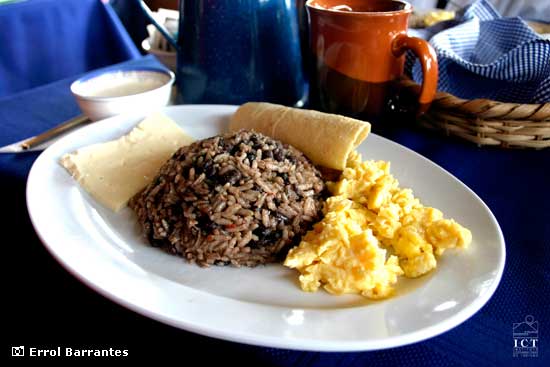
It is a typical morning in Costa Rica, and my lovely bride is craving a “Tipical” breakfast.
Costa Rica has always been an agricultural economy. Even though tourism is now the #1 industry, many folks still work close to the land. This hearty meal is just the ticket to “fuel the furnace” for another active day. Tipical breakfasts include eggs, delicious local cheese, plantains, tortillas and Gallo Pinto. Of course, a cup or two of excellent local coffee completes the equation.
Gallo Pinto is the national dish of Costa Rica. The main ingredients are black beans and rice. Recipes vary, but most cooks add onions, bell pepper, and cilantro, all fried together in a little oil. During the cooking process, the rice takes on the color of the beans. This gives the dish a speckled appearance, hence the name, Gallo Pinto. Or “Speckled Rooster” in Spanish.
Gallo Pinto is omnipresent and served in virtually every restaurant in the country, from the fanciest hotel to the Burger King at the airport. If breakfast is served, you can bet that Gallo Pinto is on the menu.
There are slight variants around the country, where local ingredients find their way into the dish. In Guanacaste, it is not unusual to find hot peppers. On the Caribbean side, we were surprised to find some shredded coconut. There is always another local favorite on the table too. No dining table in Costa Rica is complete without a bottle of Salsa Lizano. This mildly spicy condiment adds extra zip to Gallo Pinto, and almost everything else consumed here!
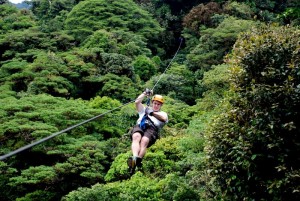
The zipline tours through the forest canopy originated as a commercial venture in Monteverde. There is some dispute about how they were invented and by whom. One of the local businesses even has a copyright on the term “canopy tour”, which has become the catch all term that many use to describe this adventuresome activity. I won’t get involved in this argument, but I will tell you that this is one of the most fun things you can do during your adventure in Costa Rica. They are scattered all over the country. But I feel that the best ones can still be found around Monteverde. There are some slight variations on the mechanics. But all are basically long cables stretching from one hilltop to another. The participant (that would be you) wears a harness, that was borrowed from rock climbing gear. There is a pulley mechanism that fits over the cable, and this attaches to your harness. You stand on a platform, lift your legs, and let gravity take over.
Soon you are flying through the trees, and over valleys, sometimes several hundred feet up. You can get moving at a pretty good clip too. There are guides with you constantly, to assure your safety. They help you get your gear on, and hook you to the cables. They are there to stop you at the end of each run. Sometimes, the platform is high up in a tree or on a tower. In these cases, you are attached to a safety line before you are released from the main cable. The pulley system itself has some redundant safety lines too. So this activity is a lot safer than it first appears.
It is not for the faint of heart, or those with a fear of heights! But it is exhilarating and lots of fun. The typical tour will have at least ten platforms, sometimes more. As each new tour opens, it brings improvements. So the established tours scramble to keep up. I have heard of a Central Valley tour that offers a long “superman” style cable. Here, you lay straight out and face down. The cable is above, so you fly like Superman. Sounds great. At least one Monteverde operator has added a “Tarzan swing” as a side attraction. They hook you up to a swinging bungie cable. You free fall about ten feet, and then take a long lazy swing out over a little gully. It is scarier than it sounds! But still fun.
The zipline tours are meant for all ages, as they really are not that strenuous. Obviously, the littlest kids are not going to be allowed. But I have seen kids as young as five years old on the tour. They usually ride double with a guide. The cables are very strong. A guide once told me that they could support a car. But some do have weight limits, that will restrict the largest folks. So if you think that this may be an issue for you, it is best to check ahead of time.
Two of the Monteverde tours also offer bridges and walkways through the cloud forest canopy. This is a great place to walk with a guide or by yourself to see what you can spot in the treetops. It is also an option for the less adventurous to enjoy while the family daredevils are on the cables. One tour operator has expanded into a full blown nature park with butterfly and hummingbird gardens, insect exhibits, a reptile and amphibian exhibit, and a full restaurant. You can enjoy a whole day here, and never leave the grounds.
One last thing. Some of the tours offer this up as a nature experience. Other than the pretty woods, this is usually not the case. The hooting and yelling tourists tend to drive the animals away. But let’s be honest. You will be standing on a platform and attached to a cable, preparing to speed high over the treetops to a destination that you may not even be able to see. Are you really going to be thinking about birds and flowers?
The town of Sarchi has become well known as the home of that colorful symbol of Costa Rica, the painted ox cart. Yes, miniature versions have become popular as mini bars purchased by tourists to ship home. But the history of the ox cart is much more interesting, and they have played a very important part in the economic development of this country.
During the colonial period, they were used for the transportation of coffee, sugar cane, tobacco and other agricultural products. Teams of two oxen would pull the product laden carts down the treacherous paths from the Central Valley to Puntarenas for eventual export. On the return trip, they would be filled with manufactured goods from Europe. This includes the famous metal church in Grecia, a small town near Sarchi. This huge church was prefabricated in Belgium in the 1890’s, and shipped to Puntarenas. It was then transported piece by piece by hundreds of the relatively tiny oxcarts, a process that took a period of several years. If you visit this magnificent edifice, take a moment to think about the drivers from a century ago, walking every step next to their oxen, and exposed to the elements. It was a difficult life.
The owners of the oxcarts painted the carts to preserve them. But as time went by, the painting became more and more elaborate. A kind of competition eventually developed over who not only had the finest team of oxen, but who had the most beautiful cart. A national icon was born. Nowadays, you can still find the occasional ox cart in use in the rural areas. However modern truck tires have replaced the gaily painted solid wooden wheels, and you usually won’t see the intricate designs of days gone by.
But the painted oxcart lives on as a locally beloved art form. When you are in Sarchi, stop by one of the oxcart factories to purchase souvenirs. Take some time to check out the artisans working in the rear. They fabricate the different wooden parts on site. If you are lucky, you will see them methodically laying down the layers of paint necessary in each design.
In 1988, the government designated the painted oxcart as the National Symbol of Work. This was in recognition of the huge contribution that the humble oxcart made to the economic and social development of Costa Rica.
Note from Pat: This is not about a fascinating subject. It is about buying kitchen tile. But lots of folks ask me about home ownership, and living in Costa Rica. This just shows how something mundane and routine, can become complicated and sometimes an adventure!
“We need a new kitchen” Yes, I know. This has been my wife’s mantra for a couple of years. It comes up every time we talk about Monteverde, where we own a small vacation home. I love my wife, and she is definitely not a nag. But if Monteverde comes up in the conversation, she mentions the kitchen.
We renovated our cute little Tico style home when we purchased it a few years ago. A contractor friend and a couple of guys from his crew came down from New Orleans to get the ball rolling. One of the projects was a kitchen counter top made from huge planks of beautiful local hardwood.
The only problem was that the wood had not been dried. As it aged, it “cupped” or curved. It got to the point that even a wine glass wouldn’t stand up straight. The hot plate wobbled, and forget about mixing anything in a bowl. Yes dear, we do need a new kitchen.
We had renovated our kitchen in New Orleans after Hurricane Katrina. Our special order three bay sink arrived blemished, and the manufacturer sent us another. They did not want the other one back. The blemish wasn’t really that bad, so we put in in the attic. It sat there for five years. We eventually decided to bring it to Costa Rica, and did so a year ago. We brought it down as checked baggage, for a big fee. It had sat in our “bodega” ever since. It was time to get something done.
We had met with a local contractor, Manuel Mata during our last visit. We have used Manuel in the past, mostly for electrical projects. But he is also known locally as a very skilled “constructor”. He is also just a very friendly and easy going guy.
We outlined our plan, and asked for his input. We settled on a slightly larger L shaped ceramic tile countertop, with shelves below. Simple and functional. All we had to do was purchase the tile, and coordinate his schedule with our next visit. We have learned from experience that we want to be around when big projects are being done.
We arrived in Liberia on a Wednesday afternoon. We had left New Orleans early and were already toasty from lack of sleep. We still had to shop for tile, and hit the “gringo” grocery store for supplies. We mentioned the tile to the rental car guy. He told us to go to Santa Cruz, about 45 minutes away. We could buy handmade tiles from Guatil.
Guatil is a locally famous little town, and Melissa and I had always wanted to visit. They have been making pottery for at least 200 years. Literally everyone in town is involved in this local folk art.
Tile from Guatil sounded great. But that would add an hour and a half of driving to an already long day. We decided that we would just shop in Liberia, before making the 2½ hour drive to Monteverde.
The first stop wasn’t promising. The “ceramica” was either way too plain, or way too gaudy, or just weird. Plain primary colors or fake wood. Overly detailed fake marble abounded. There was one tile that had water splashes printed over fake marble. I had seen this pattern in every public urinal in the country. I wasn’t putting it on my countertop!
We tried a few more places, and quickly realized that everyone had the same tile. We finally found the gringo ceramic store. Lots of beige and rough stone. It was all expensive, and what you would find in a suburban McMansion. Our home is simple and we like the rustic feel. This wasn’t working for us either. We finally threw in the towel, and drove to the house.
We met with Manuel the next morning. He agreed to come the next morning to start demolishing the old kitchen and roughing in the new one. We also learned that we needed some plumbing parts that were not available in our little town.
So Melissa and I decided to take a day trip. It would be fun day. We would leave early on Friday, and buy the plumbing parts in Liberia, then go to Guatil for the tile. Then we would finish the day with a stop at “Bob’s”, in the little beach town of Playa del Coco.
Bob’s place is actually named Papagayo Seafood. Bob is the owner and chef, from Baton Rouge. Local friends from the tourism business had taken us there years ago, and it is a favorite stop for us when we are in this part of the country. Fresh fish and shrimp, done by a fellow Louisianan. Well prepared and spicy. Just our style.
This was shaping up to be fun excursion. Plus if we got done early enough, we might even get an hour or two of beach time! But I have been to Costa Rica enough to realize that maybe I was being a little optimistic.
We got a late start. But the drive back down the mountain was very nice. It was a beautiful clear day. On the east side of the road, we saw one beautiful vista after another. Rolling hills, huge green valleys, and an ever changing cloudscape playing over the mountains. On the west side we could see all the way to the Golf of Nicoya. Even after twenty years of visiting, I still marvel at these views.
We rattled down the bumpy road to Las Juntas, where we joined the Pan American highway. This is THE major traffic artery in Costa Rica. They had been repairing a bridge when we came in from the airport. But we hit it right, and the delay had not been bad. The bridge repairs were continuing this day too, but now they were also paving the road. Again, we hit it right. But we saw a two mile long delay in the oncoming lane. We dreaded the return.
We had to knock around Liberia for over an hour before we found the plumbing parts, then it was on to Santa Cruz. It was getting late in the day, but we figured that there might be a store that stocked Guatil tile. So we asked around. “Ceramica Senor? Si, here is some that looks like wood. No? Here is one that looks like water splashes. Perfect for your kitchen!” We headed for Guatil.
Guatil was extremely fun and interesting. The pottery from there is widely sold in Costa Rica. So we were already familiar with this beautiful folk art. We have a couple of pieces in our home, and have purchased some as gifts for friends. But we knew little about the town.
We had heard that many years before, the community had gotten together to build a kiln for all to share. But these days, it seemed that most folks had their own. Just about every house had a wood pile, and a little igloo shaped stone kiln. We stopped at one little “tiende” that had a group of guys working on pottery in back.
We asked for ceramica. We were met with a blank stare. The guy spoke passable English. When he realized what we were asking for, he just shook his head. The material was not durable enough for a countertop. Maybe for a backsplash. But they didn’t make tiles.
We still enjoyed our visit and he took us though the whole process. Local clay of different colors is collected from around the region. The pots are made from a clay that dries white. Then thin layers of the desired colors of clay are applied with a paintbrush. We watched as one of the artisans “painted” a monkey on a pot with clay. Then the clay dries for a few more days. They go back with a stylus, and cut grooves down to the different colored layers to finish the design. The pot is then finished with wax, and fired.
The result is a wonderfully detailed piece of pottery. Most of these are nature themed. Monkeys, butterflies, waves, birds, etc. There are some artesians making more abstract patterns as well. We purchased a couple of small pieces. Including one for my ever diligent assistant, Jennifer.
One of the fun things, was the tools they were using. Whenever you find folks without a lot of money, you will be amazed at how well they improvise or re-purpose an item. It was no different here. We noticed that all the potter’s wheels were actually the flywheels from an old motorcycle engine. The bearings made it spin smoothly, and the weight of the flywheel kept it going for a long time. Very ingenious
But we still needed tile, and it was getting late. So we continued our trek, and ended up in Nicoya. We stopped at one store with more of the same old stuff, and found another high end “salon” or showroom. We were met by a pretty and stylish young woman. They had exactly what we wanted, small glazed coffee colored tiles. They were more expensive then we planned, but we were getting desperate. We told her what we wanted. She said we could pick them up in five days.
This wouldn’t do! We needed these now. She saw our anguish.
I wish I could remember the name of this store. I would love to tell her boss how sweet and helpful this young woman was. She called a large store in downtown Nicoya, and though it was getting late, she told them we were on our way. She gave us directions, and we dashed off.
Did you know that there are no street addresses in Costa Rica? It’s true. Our directions were “From the INS (national insurance) office go 400 meters west, the go 200 meters north”. Usually, (but not always) 100 meters translates to one block. We forget to even get the name of the store.
We hit downtown Nicoya at rush hour. The main drag was a parking lot. It seemed that one cop was trying to direct traffic for the entire town.
We picked our way through the traffic, and stopped a couple of times to ask local folks for directions to the INS office. We just couldn’t find it, and the traffic was defeating us. It was almost 5:00 PM. We were getting tired and stressed. We had not eaten since breakfast, and now we were not going to get tile. It wasn‘t going well.
I have always told me wife that one of my many attributes is my “impeccable sense of direction”. She always gives me a loving smile.
I don’t know how I pulled this off. But I figured that I would just head four blocks west, and wing it. I just made the turn and went. Melissa was unconvinced, and told me so. I told her not to worry, as the street kind of ended at a residential section. I turned north. I said the store should be right….here. And there it was. We had pulled up to “Pisas de la Bajura”. A tile warehouse. A big one. Only 15 minutes before closing.
They must have thought that these two giddy gringos were on drugs. They had lots of choices, and we were happy to say the least. They had exactly what we were looking for. We settled on a simple 6 inch terracotta tile, with a rustic edge for the countertop. We chose an understated pattern with leaves and flowers for the backsplash. Not a water splash patterned tile in the place. And the prices were the best we had seen all day. We left as happy campers.
Melissa was navigating, and had the map in her lap. She pointed out that we were so far south that it didn’t make sense to go back through Liberia. We should just drive twenty miles, and cross the Tempisque river bridge back to the mainland. We would end up hitting the Pan American highway near Las Juntas. At first, I resisted a little. I wanted to go to Bob’s!
But I guess my impeccable sense of direction has rubbed off on her. She pointed out that on a normal day, this was at least an hour shorter, maybe even quicker than that. We would also miss most of the traffic jams due to the roadwork. She had me there.
So instead of Bob’s, we got to eat at our favorite BBQ restaurant, Tres Hermanos. This is at the corner of the bridge road and the Pan Am highway. Ya know, nothing’ says good eatin’ like a twenty foot tall statue of an anatomically correct brahma bull. Nothing says Happy Holidays, like putting a giant freakin Santa hat on it.
The construction traffic on the Pan Am highway was backed up way past the restaurant, but we slipped in from the side road. We ordered up some drinks. Melissa had the pork ribs, and I had a very good 16 ounce rib eye. They cook over a real wood fire here, and really know what they are doing. The owners are from Texas, and they even host an annual BBQ competition. They even make thier own Texas style sausage.
While we ate and drank, we relaxed and watched the traffic. It seemed that the stoppage alternated directions every thirty minutes. We started to time the delays, and had another drink. We did this to kill some time. Plus after the day we had, we really wanted another drink.
When we edged onto the road again, we were close to the actual bridge construction. Less than a minute later, the traffic started to flow. We breezed through, and turned off at Las Juntas for the ride back up the mountain.
We were tired, and felt every bump on the unpaved road. But ya know, it had been a pretty awesome day!